Living in a city usually means making the most of whatever space you have.
For some people, that might be a small balcony. For others, it’s a rooftop, a sunny window, a tiny patio or even an empty wall.
But here’s the good part: you don’t need a big backyard to have a garden.
Urban gardening has become a simple way to bring a little more greenery into homes surrounded by concrete. And the best thing about it is that there isn’t just one way to do it.
You can create a colourful balcony garden, turn your terrace into a vegetable patch, grow plants vertically on a wall, or even bring a small garden indoors.
The right choice simply depends on your space, sunlight, lifestyle and, of course, the kind of garden you want to enjoy.
So, let’s look at some of the most practical types of gardens you can create in an urban home.
1. Balcony Garden
A balcony is probably one of the easiest places to start gardening in the city.
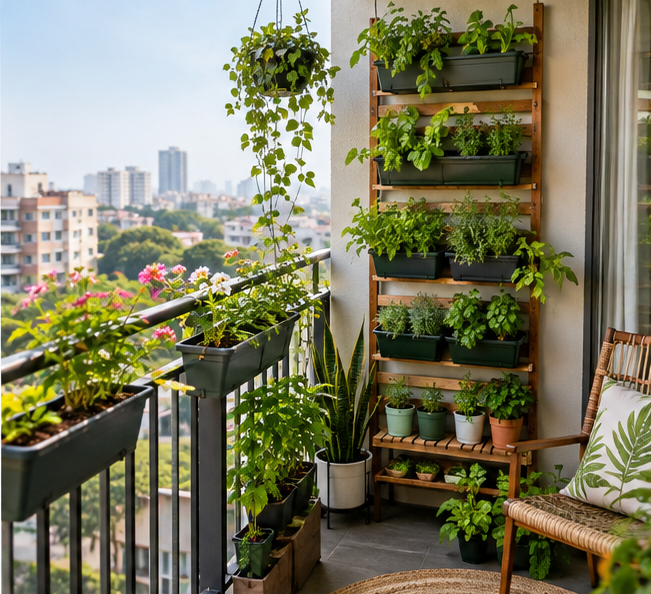
Even a relatively small balcony can accommodate a surprising number of plants if you use the space wisely.
How to create one
Start by looking at how much sunlight your balcony gets.
Then choose plants that actually suit those conditions. You can use:
- Railing planters
- Hanging pots
- Grow bags
- Small terracotta pots
- Vertical shelves
- Wall-mounted planters
If you’re short on floor space, think upwards.
A combination of hanging plants and vertical shelves can give you plenty of greenery without making the balcony difficult to use.
Good for:
Apartments, small balconies and beginners.
2. Rooftop or Terrace Garden
If you have access to a rooftop, you’ve got something many urban gardeners would love: space.
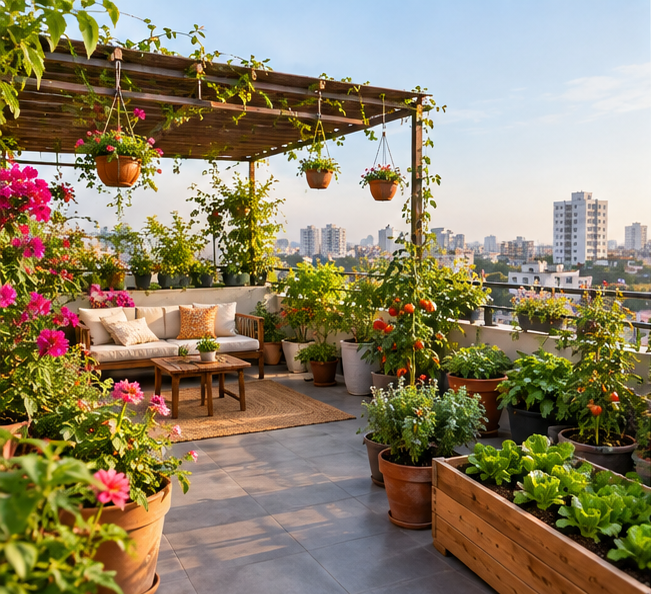
A terrace can be turned into anything from a simple collection of pots to a complete garden with vegetables, flowers, herbs and a sitting area.
How to create one
Before bringing lots of pots onto a terrace, check the practical side first.
Think about:
- Waterproofing
- Drainage
- Water availability
- Sunlight
- Wind
- Access to the terrace
- The suitability of the structure for your planned garden
Once the basics are sorted, you can divide the terrace into different zones.
For example, one corner could be for vegetables, another for flowers and another could become a small sitting area surrounded by plants.
Good for:
Homes with terraces and people who want more space for gardening.
3. Vertical Garden
Here’s a clever option when floor space is the problem.
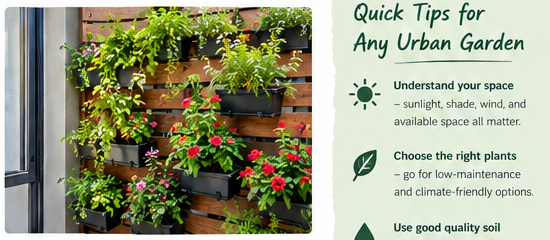
Go vertical.
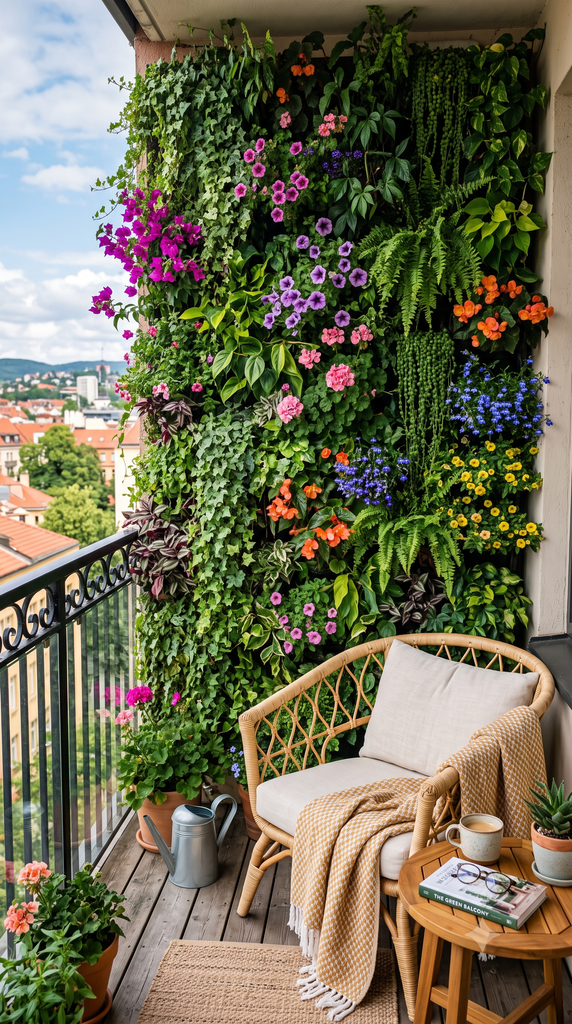
Instead of spreading plants across the floor, use walls, frames, shelves, hanging systems or trellises.
A vertical garden can turn a boring wall into the most interesting part of your space.
You can use it for decorative plants, herbs, leafy greens and suitable flowering plants.
How to create one
Start with a strong wall or structure that can safely support your planters.
Then arrange plants according to their size and light requirements.
Keep frequently used herbs or plants within easy reach. Taller plants and climbers can be placed higher or trained along a trellis.
Don’t forget watering. A vertical garden can become difficult to maintain if every pot is hard to reach.
Good for:
Small balconies, patios, narrow terraces and anyone who loves a modern look.
4. Kitchen Garden
Why should your garden only look good?
It can also give you something to bring straight into the kitchen.
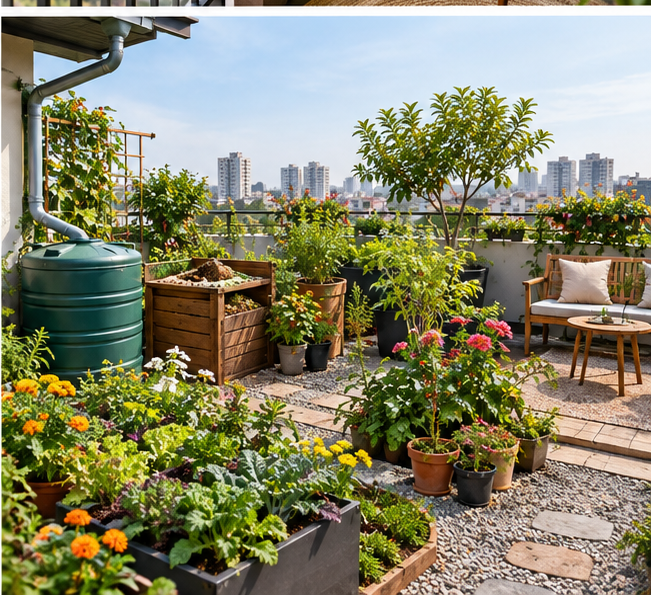
A small kitchen garden can be created on a balcony, terrace or sunny window area.
Depending on your space and local growing conditions, you could try herbs and vegetables such as:
- Mint
- Coriander
- Basil
- Green chillies
- Tomatoes
- Spinach
- Radish
- Beans
- Okra
You don’t have to start with ten different vegetables.
Start with two or three things you actually use at home.
There’s something genuinely satisfying about stepping onto your balcony and picking a handful of fresh herbs for your dinner.
Good for:
People who enjoy cooking and want to grow some of their own herbs or vegetables.
5. Indoor Garden
Not every plant needs to live outside.
If you have a bright room with suitable natural light, you can bring greenery indoors too.
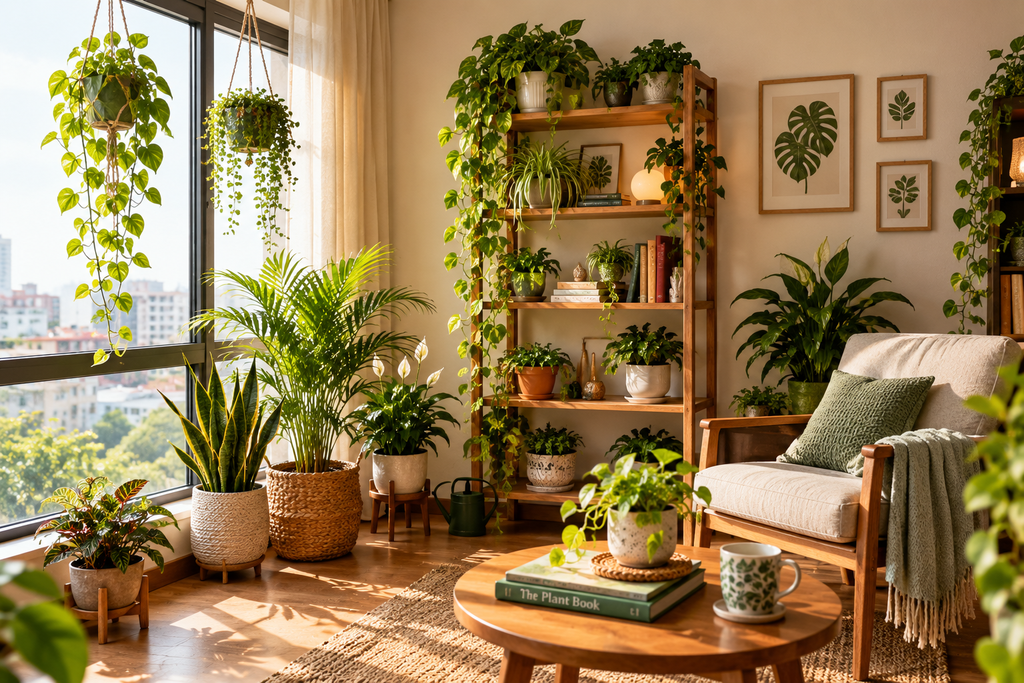
Indoor gardening is especially useful for people who don’t have a balcony or terrace.
You can create a green corner using shelves, plant stands, small pots and hanging planters.
Some commonly grown indoor plants include options such as snake plants, pothos and certain varieties of philodendrons, depending on the conditions in your home.
The important thing is not to assume that every indoor plant needs the same care.
Check the light requirements before choosing your plants.
And remember one golden rule:
Don’t love your indoor plants to death with too much water.
Good for:
Apartments, bedrooms, living rooms, workspaces and homes without outdoor space.
6. Flower Garden
If your idea of a perfect garden involves colour everywhere, create a flower garden.
You don’t need hundreds of plants.
A carefully chosen combination of flowering plants can make even a small terrace or balcony feel completely different.
You can combine plants with different colours, heights and flowering periods to keep the garden interesting.
Hanging baskets can add another layer of colour, while larger pots can anchor the corners.
If you’re choosing flowering plants, consider the amount of sunlight available and the climate in your area.
Good for:
People who want a colourful, cheerful and decorative garden.
7. Herb Garden
If a full vegetable garden feels like too much work, start with herbs.
An herb garden doesn’t require much space and can fit nicely on a kitchen window, balcony shelf or small terrace corner.
You could grow herbs such as:
- Mint
- Basil
- Coriander
- Curry leaves
- Lemongrass
- Rosemary, where growing conditions are suitable
Keep the herbs somewhere convenient.
After all, the easier they are to reach, the more likely you are to actually use them.
Good for:
Beginners, cooking enthusiasts and people with very limited space.
How to Choose the Right Garden for Your Home
This is where many people overthink things.
You don’t need to choose a garden style just because it looks good on Instagram.
Start with your actual space.
Ask yourself five simple questions:
1. How much space do I have?
A small balcony needs a different approach from a large terrace.
2. How much sunlight do I get?
Observe the space throughout the day before buying plants.
3. How much time can I give?
If you’re busy, choose plants and a garden design that won’t demand constant attention.
4. What do I want from the garden?
Do you want:
Flowers?
Create a colourful ornamental garden.
Fresh herbs and vegetables?
Try a kitchen garden.
A relaxing space?
Combine plants with comfortable seating and lighting.
More greenery in less space?
Go vertical.
5. What style do I like?
This one is completely personal.
Your garden should feel like your space, not a copy of someone else’s terrace.
How to Create a Garden Theme
Once you’ve decided what type of garden you want, the next step is giving it a theme.
A theme doesn’t mean everything needs to match perfectly.
It simply gives the garden a visual direction.
Here are a few ideas.
🌿 1. Tropical Theme
Think big leaves, lush greenery, hanging plants and a slightly wild look.
Use:
- Large leafy plants
- Hanging planters
- Bamboo or natural textures
- Wooden elements
- Dense greenery
This works particularly well on larger balconies and terraces.
🌸 2. Colourful Flower Theme
If you love bright colours, build your garden around flowering plants.
Choose two or three main colours instead of using every colour available.
For example:
Pink + white + green
or
Yellow + orange + green
This gives the garden a more intentional look.
🪴 3. Minimalist Theme
Prefer clean and simple?
Keep things minimal.
Use:
- Similar-looking pots
- A limited plant palette
- Clean lines
- Neutral colours
- Plenty of open space
The result can feel calm rather than crowded.
🌱 4. Kitchen Garden Theme
This one is practical and beautiful at the same time.
Use wooden planters, grow bags or terracotta pots and fill them with herbs and vegetables.
Add simple labels to the pots if you like.
You can even create separate sections for herbs, leafy vegetables and seasonal crops.
🧘 5. Zen-Inspired Garden
Want your terrace to feel like a place to escape?
Try a calmer design.
Use:
- Bamboo
- Green foliage plants
- Pebbles
- Wooden elements
- Simple pots
- A small water feature
- Comfortable seating
Don’t overcrowd it.
The empty space is part of the design.
A Simple Formula for a Beautiful Urban Garden
If you’re designing your first garden, try this simple formula:
60% greenery + 30% flowers or colour + 10% décor
It’s not a strict gardening rule—just a useful design starting point.
For example, you could have mostly green foliage, a few flowering plants and then add a chair, lantern, small table or decorative planter.
This keeps the garden visually interesting without making it feel overloaded.
Don’t Forget the Practical Stuff
A beautiful garden still needs to be easy to live with.
Before you start, think about:
Watering:
Can you comfortably water all the plants?
Drainage:
Where will excess water go?
Maintenance:
Can you reach every pot?
Sunlight:
Are the plants getting what they need?
Safety:
Are heavy planters and hanging pots securely positioned?
Space:
Can you still walk, sit and use the area comfortably?
A garden should make your home better—not turn into another daily chore.
Start Small. Make It Yours.
The easiest way to create an urban garden is to stop thinking about the perfect garden and simply start.
Take one empty corner.
Add a few pots.
Grow something you actually like.
See how the plants respond.
Then slowly build from there.
Maybe your balcony eventually becomes a colourful flower garden.
Maybe your terrace turns into a vegetable garden.
Maybe a plain wall becomes a lush vertical garden.
Or maybe you simply end up with five beautiful plants next to your morning tea spot.
And honestly, that’s a garden too.
There is no single right way to garden in the city.
The best urban garden is the one that fits your space, your routine and the way you want to live.
So look around your home.
That empty balcony, terrace or corner might already be waiting to become your favourite green space.