Cities are growing rapidly, but green spaces are becoming harder to find. High-rise buildings, limited outdoor space, busy lifestyles and increasing concrete coverage can make it difficult for people to stay connected with nature.
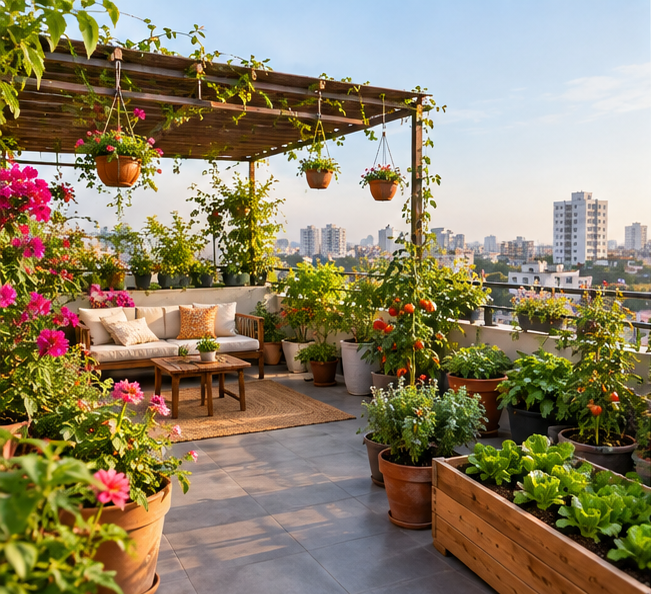
The good news is that you don’t need a large backyard to enjoy gardening.
With the right planning, a balcony, terrace, rooftop, window sill or even a small corner of your home can become a beautiful green space.
Urban gardening is all about making the most of the space you have and bringing plants into everyday city life.
From growing herbs and vegetables to creating a relaxing terrace garden filled with flowers, urban gardening offers practical and creative ways to make city homes greener.
What Is Urban Gardening?
Urban gardening means growing plants, flowers, herbs, fruits or vegetables within a city environment.
Unlike traditional gardening, urban gardening often works with limited space. Plants may be grown in:
- Balconies
- Rooftops and terraces
- Window boxes
- Vertical gardens
- Small patios
- Indoor spaces with sufficient light
- Community gardens
- Container gardens
Modern urban horticulture also includes techniques such as vertical farming, rooftop gardening, microgreens and soilless cultivation. ICAR has highlighted rooftop and vertical gardening as useful approaches for growing plants where conventional garden space is limited.
The goal isn’t simply to grow plants. It’s to create a greener, more enjoyable and more functional living environment.
Why Is Urban Gardening Becoming Popular?
One of the biggest reasons is simple: people want more greenery around them.
A small terrace garden can transform an unused concrete space into an area where you can sit, relax, grow plants and spend time outdoors.
Gardening can also provide a sense of peace and accomplishment. ICAR publications have discussed gardening’s association with tranquility, stress reduction and a sense of mastery over one’s environment.
Urban gardening can also support household food growing. A terrace or balcony can be used for herbs, leafy vegetables, tomatoes, chillies and other suitable crops.
1. Make the Most of Small Spaces
Limited space doesn’t mean limited gardening possibilities.
One of the easiest ways to start is with container gardening.
Instead of planting directly into the ground, plants can be grown in:
- Terracotta pots
- Plastic planters
- Grow bags
- Wooden planters
- Hanging baskets
- Recycled containers
- Vertical planters
The important thing is to choose containers according to the plant’s size and make sure they have suitable drainage.
For very small balconies, vertical gardening can be especially useful because plants can be arranged upward instead of spreading across the floor.
Try Vertical Gardening
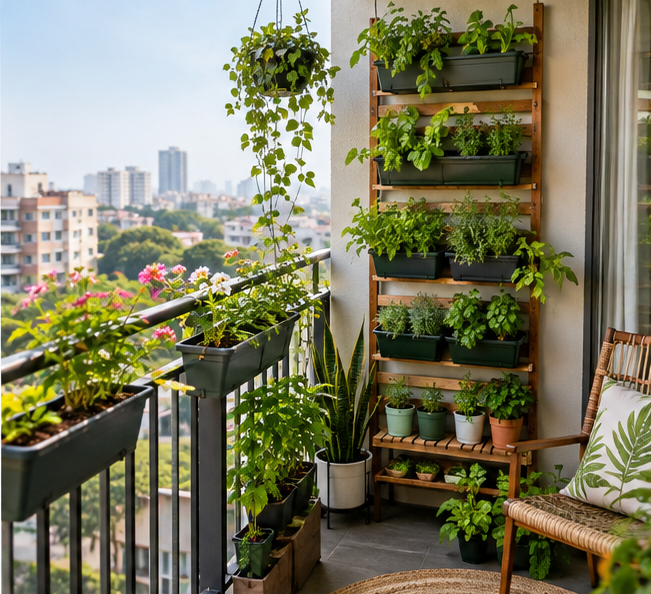
A vertical garden can include wall-mounted planters, hanging pots, shelves and climbing plants.
This approach allows you to create a green wall while keeping valuable floor space available.
ICAR has also developed vertical-growing models designed specifically for kitchen and terrace gardens, demonstrating how plants can be arranged efficiently in compact areas.
2. Turn Your Terrace Into a Garden
A terrace is one of the most valuable gardening spaces available in many urban homes.
Instead of leaving it completely unused, you can turn it into a relaxing terrace garden.
A well-designed terrace garden can include:
- Flowering plants
- Decorative foliage plants
- Herbs
- Vegetables
- Fruit plants suitable for containers
- Hanging plants
- Climbers
- Seating areas
- Decorative planters
- Vertical garden structures
Before starting a terrace garden, however, consider practical factors such as sunlight, drainage, water availability, wind exposure and the suitability of the terrace for the planned setup.
A little planning at the beginning can prevent major problems later.
3. Choose Plants According to Your Space
One of the most common mistakes beginners make is choosing plants simply because they look attractive.
Instead, select plants according to your growing conditions.
Consider:
Sunlight:
How many hours of direct sunlight does your space receive?
Space:
How much room will the mature plant require?
Water:
Can you provide regular watering?
Climate:
Is the plant appropriate for your local climate?
Maintenance:
How much time can you realistically spend caring for it?
For example, herbs such as mint, coriander and basil can work well in suitable containers, while flowering plants can add colour and visual appeal.
For vegetable gardening, compact or container-friendly varieties can make better choices where space is limited.
4. Grow Your Own Herbs and Vegetables
Urban gardening doesn’t have to be purely decorative.
You can create a small kitchen garden and grow fresh herbs and vegetables at home.
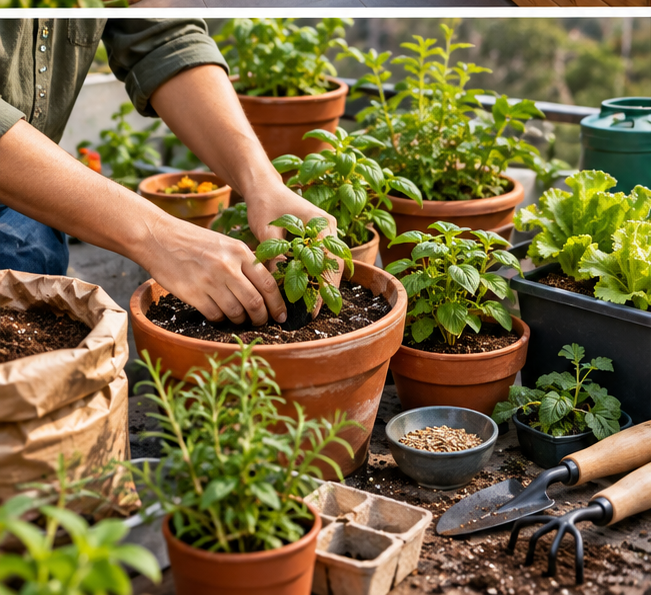
Depending on your local climate and growing conditions, possibilities may include:
- Mint
- Coriander
- Basil
- Curry leaves
- Green chillies
- Tomatoes
- Spinach and other leafy greens
- Radish
- Beans
- Okra
Start small rather than trying to grow everything at once.
A few healthy plants that you can maintain consistently are more useful than dozens of neglected pots.
Terrace and kitchen gardens have long been promoted in India as ways to grow useful plants at household level.
5. Create a Green Balcony
Don’t have a terrace?
Your balcony can become a beautiful mini garden.
Use the railing, walls and vertical space intelligently.
For example:
Railings: Use suitable railing planters.
Walls: Add vertical planters or shelves.
Corners: Place taller plants in larger containers.
Ceiling: Add secure hanging planters where appropriate.
Floor: Keep enough open space for movement.
The key is balance. A beautiful balcony garden doesn’t need to be overcrowded.
6. Don’t Forget Soil and Drainage
Healthy plants need more than sunlight and water.
The growing medium should provide suitable support, aeration and drainage.
Poor drainage can cause waterlogging and root problems, especially when plants are grown in containers.
Always check that pots have appropriate drainage holes and avoid allowing excess water to remain around the roots.
Organic matter and compost can also play an important role in maintaining healthy growing media.
Urban gardening can even connect with household waste management. For example, ICAR-CIRCOT reported in 2026 on aerobic composting that converts organic waste and dry leaves into nutrient-rich compost for use in soil.
7. Use Water Wisely
Water is one of the most important resources in gardening.
Instead of watering every plant in exactly the same way, observe what each plant needs.
Some practical habits include:
- Check the soil before watering.
- Water according to the plant and weather conditions.
- Avoid unnecessary overwatering.
- Use containers with proper drainage.
- Consider drip irrigation for larger terrace gardens.
- Reuse suitable captured rainwater where appropriate and safe.
For larger or professionally designed gardens, smart irrigation systems and moisture sensors can also help manage watering more efficiently. ICAR research initiatives include sensor-based irrigation and other technologies for more efficient horticulture.
8. Add Flowers for Colour and Pollinators
A garden doesn’t have to be only about vegetables.
Flowers can completely change the appearance of an urban garden.
Consider adding suitable flowering plants such as marigolds, hibiscus, bougainvillea or other locally appropriate varieties.
Flowering plants can also contribute to urban biodiversity by providing resources for pollinators. Urban home gardens have been associated with ecological and recreational benefits, including opportunities for pollination and biodiversity.
9. Make Your Garden a Relaxation Space
An urban garden doesn’t have to be purely functional.
You can design it as a place to relax after a busy day.
Add:
- A comfortable chair
- A small table
- Warm lighting
- Decorative pots
- Hanging plants
- A small pathway
- Natural materials such as wood or bamboo
- A few flowering plants
Imagine finishing your workday, stepping onto your terrace and sitting among greenery instead of looking at a completely empty concrete roof.
That’s one of the biggest attractions of urban gardening.
10. Start Small and Grow Over Time
You don’t need to transform your entire terrace or balcony in one weekend.
Start with five or six plants.
Learn:
- How much sunlight your space receives
- How often your plants need water
- Which plants perform well
- What pests appear
- How your plants respond to different seasons
Once you understand your space, gradually expand your garden.
Gardening is a process rather than a one-time project.
Common Urban Gardening Mistakes to Avoid
1. Overwatering
More water doesn’t necessarily mean healthier plants. Always consider the plant, soil and weather.
2. Ignoring Sunlight
A shade-loving plant and a full-sun plant have very different requirements.
3. Overcrowding
Plants need room for growth and airflow. Avoid filling every available space with pots.
4. Choosing Plants Without Research
A plant that looks beautiful in a nursery may not be suitable for your specific terrace or balcony.
5. Forgetting Maintenance
A garden needs regular attention. Pruning, watering, cleaning, feeding and pest monitoring should be part of your routine.
How to Start Your Urban Garden: A Simple Plan
If you’re completely new to gardening, follow this simple approach:
Step 1: Choose your space
Select a balcony, terrace, window area or other suitable location.
Step 2: Observe sunlight
Track how much sunlight the area receives during the day.
Step 3: Select suitable plants
Choose plants according to sunlight, space and your local conditions.
Step 4: Select containers
Use appropriate pots, grow bags or planters with good drainage.
Step 5: Prepare your growing medium
Use a suitable potting mix and organic matter where appropriate.
Step 6: Plant carefully
Give each plant enough space and avoid damaging the roots.
Step 7: Create a watering routine
Water according to plant needs rather than following a rigid schedule.
Step 8: Maintain regularly
Remove dead leaves, monitor pests and provide appropriate nutrition.
Step 9: Expand gradually
Once you become comfortable, add more plants and experiment with vegetables, herbs and flowers.
The Future of Urban Gardening
As cities become more densely developed, gardening is increasingly moving into unconventional spaces.
Rooftops, balconies, vertical walls and compact growing systems can all contribute to greener urban environments.
Recent ICAR initiatives demonstrate this broader shift toward scientifically planned urban greening, including a 2026 project with Delhi Metro focused on a climate-resilient green corridor and pollution-tolerant plant species.
Urban gardening isn’t simply about decorating a home with plants.
It can become a way to reconnect with nature, make better use of unused spaces, grow some of your own food and create more pleasant environments within the city.
Final Thoughts
You don’t need acres of land to start gardening.
You need a suitable space, a few plants, basic knowledge and the willingness to care for them.
A small balcony can become a herb garden.
An empty terrace can become a relaxing green retreat.
A plain wall can become a vertical garden.
And a few pots can be the beginning of a much greener lifestyle.
Start with one plant. Learn from it. Then grow from there.
Because even in the middle of a concrete city, there is always room for a little more green.